~Mia
Showing posts with label author help. Show all posts
Showing posts with label author help. Show all posts
Saturday, November 8, 2014
How To Make your Press Kit Media Friendly #AuthorHelp
Every so often I go on a PSA rant about something on FaceBook. Here is today's advice about creating easy and effective Media Kits. I've also included an example for your enjoyment.

Monday, September 29, 2014
Describing Ladyville...Tips for the Discriminating Smut Author #eroticromance #authorhelp
Well, I'm slipping or I've been pretty happy because I had to go way back into July to find something to post. For those new to this form of torture, I take a FB rant and discuss it here on my blog. Today we're talking about some body parts.
The post:
Dear authors,
An aureole is: a circle of light or brightness surrounding something, especially as depicted in art around the head or body of a person represented as holy.
FYI, It's not a sexy body part.
Love, Mia.
.png) |
| My cover model for Just Ask is not a lady, but he has nice areolas! |
The Discussion...
I write erotic romance, which contains several body parts that are often used (hopefully quite vigorously.) I've seen aureole used several times instead of areola. It could be because Word will tag areola as incorrect and doesn't tag aureole as incorrect. So perhaps they think they're doing it all wrong. No one wants wrong boobs, be they man boobs or lady boobs. But aureole is all sorts of wrong, so go to your spell check and add AREOLA right this moment.
Other Parts to Discuss...
While I'm on a rant, let's talk about things I DO NOT WANT TO READ when it comes to getting down with the lady parts.
1) Suckling, suckle, suckled. The definition of this is: To feed (a baby or young animal) from the breast or teat. It's just not erotic despite the hero being 6' 2" of hot hunk doing the suckling. If he's suckling on red aureoles, I'm chucking your book. My children killed my sex life. I don't need to be reminded of that while reading your sexy book. It makes me all sorts of crabby.
2) Womb. I know we just dropped down to the other section of Ladyville, but this begs discussion. In no way, shape, or form does a womb have a place in smut. Because...
- The womb is the uterus and again, the uterus is for babies. I had babies in my uterus for eighteen months (two pregnancies) and now that I am fixed, my uterus is a source of anger. Do not get me started on how men own the world, ruling the tampon and feminine napkin organization. If a man had to bleed out of his fixed dick every month he'd spend all of his time and energy to make it not happen, and you bet it would be safe and effective. ::grumble::
- There's no way a man is going to be using his massive tool on a uterus unless you read/write those massive dick erotica stories where the cervix opens like a garage door to allow that massive beast of a cock entrance to the forbidden womb. Yes, it's a sub-genre of erotica, and to each his/her own thing. My coochie clenches painfully at the thought.
- There could be contact with the cervix but I don't want to think about that, either. Cervix is clinical and the only time I think about my cervix is when Dr. Young is doing a pap smear and scraping cells off of the poor little thing, or during my period when my cervix is cramping to allow for bodily maintenance I don't need.
3) Snatch. The definition is to grab quickly. Ladyville deserves some respect and a leisurely fingering, not a grab and grope. There are enough things to call it without going to porn-land.
Thanks for stopping by!
Monday, September 22, 2014
How Not To Piss Off Your Peers... Advice for the New Author #authoradvice #amwriting
So today's Dear Author post is aimed at advice for the new author. Yes, we were all new once. Yes, we all wished someone would help us get seen! There are ways to do that, though, and ways NOT to do that. This Dear Author letter was aimed for my Facebook wall audience, but take heed because this message covers anywhere, especially GoodReads.
The Post...
Dear New Authors,
The fastest way to loose assistance from your peers is to spam their wall with your book, page, group, street team info. The fastest way to GAIN assistance? Get out and chat. Introduce yourself as a person, smile, shake hands, share man candy and bacon (well, the last two work for me.)
Love, Mia.
Discussion:
I know some new authors are sputtering at this point. But...but... We need to be SEEN! We need to be HEARD! We need HELP!
Let me ask you this first... In the real world, would you market your book using these tactics if they were free?

It takes time and effort to build friendships and alliances in the publishing world. If this is your career, then networking is well worth the effort.

The fastest way to loose assistance from your peers is to spam their wall with your book, page, group, street team info. The fastest way to GAIN assistance? Get out and chat. Introduce yourself as a person, smile, shake hands, share man candy and bacon (well, the last two work for me.)
Love, Mia.
Discussion:
The newbie author just probably blinked and called me evil words because I am so uncaring and unhelpful! But let's break it down. SPAM is something unsolicited and unwanted sent electronically and usually to a large number of people.
I know some new authors are sputtering at this point. But...but... We need to be SEEN! We need to be HEARD! We need HELP!
Let me ask you this first... In the real world, would you market your book using these tactics if they were free?
- Telemarketing calls at dinner?
- Sticking notes and advertisements under windshields at the plaza?
- Mass post card mailings to buy your book?
If you said yes to any of the above and aren't already seeing the golden light of connection I'm offering you at the end of the tunnel... As my Southern friends would say, bless your heart. Good luck with your writing journey. Have a piece of bacon on your way out.
If you said, "NO! Absolutely not. I hate telemarketers, junk mail, and windshield notes! Show me the way, Mia!" Then read on.
If you don't want to SPAM potential readers/buyers/fans/authors who might help you, here's a short list of what NOT to do on any social media platform (Facebook, GoodReads, Twitter...)
If you don't want to SPAM potential readers/buyers/fans/authors who might help you, here's a short list of what NOT to do on any social media platform (Facebook, GoodReads, Twitter...)
- Don't friend someone and then ask them to like your page, buy your book, vote for you, or anything else that has to do with you as an author or your book.
- Don't join groups in Facebook or GoodReads and then SPAM the group immediately with your book sale, book like plea, contest, new release, etc.
- Don't tag anyone on Facebook in book promotion type posts unless you have permission to post things to their Wall.
- Don't add people to a group on Facebook without their permission.
- Don't send people a book recommendation for your own book on GoodReads.
- And though it's your wall, I would avoid posting promotional posts all the time, every time. People get sick of the rolling infomercial.
It takes time and effort to build friendships and alliances in the publishing world. If this is your career, then networking is well worth the effort.
- Do introduce yourself and say thank you. "Hi, I look forward to getting to know you. Thanks for your friendship!"
- Do comment and like posts, say congratulations on that sale or release, offer condolences for a bad day...you get the picture. Be friendly.
- Post only to your wall until you get to know people. I only tag people if it's something funny and something I know they'd love. For example, tagging me in hot man candy pics and bacon shots is absolutely okay.
- Promote your favorite author now and then (because you're a reader, too, right?)
- Join groups in your genre and interact with readers as a reader. Readers and other authors will take the time to look you up. Trust me on this.
- Wish people "Happy Birthday." It's easy, it's fun, and you'll get to know people that way.
- Post about yourself so people get to know you. Even if you use a pen name you can include readers in your daily activities such as your love of bacon or coffee. Oh, that's me. :-D
- Do interact with authors and readers as appropriate. Try to include everyone and not just your new group of friends.
- Be nice, be yourself, and be kind.
You guys can have cake for reading this far. You can have some of the bacon from above, too.
Thanks for stopping by!
Saturday, September 13, 2014
Taking the Move Out Of Your Writing: Choosing Better Verbs #amwriting #editing #authorhelp
On Facebook I often have a Dear Author post that deals with what's going on around me. It might be a rant about usage of passive voice, or lack of etiquette, or a plea for more bacon and man candy posted on my wall.. who knows what tickles my fancy at any given moment. I have decided since I don't personally blog enough that I would transfer my Dear Author posts here.

Dear Authors,
Please strike the word "move" from your writing vocabulary. It's weak and non-descriptive. Example: He moved across the yard. He skipped (or hobbled, limped, crawled, flew, streaked, sashayed, waddled) across the yard. See how much better that is? Think how much better your sex scenes will be, too! No more moving in and out, moving his hand up her body (yes, get rid of body as well!)
Love, Mia.
Discussion:
The word "move" is a pet peeve of mine while reading, in my own writing, and in any editing I do for other authors. It's a vague verb and doesn't give the reader a good description of what's going on besides something or someone changing location (however small.) It's not a horrible word all alone, but when you read a paragraph in a book that contains three or four moves in one paragraph it becomes tedious.
The above example shows that a better verb gives you an entirely different mental picture. Let's discuss it more here.
Example: He moved across the yard.
Better: He skipped (or hobbled, limped, crawled, flew, streaked, sashayed, waddled) across the yard.
So today's post:
Please strike the word "move" from your writing vocabulary. It's weak and non-descriptive. Example: He moved across the yard. He skipped (or hobbled, limped, crawled, flew, streaked, sashayed, waddled) across the yard. See how much better that is? Think how much better your sex scenes will be, too! No more moving in and out, moving his hand up her body (yes, get rid of body as well!)
Love, Mia.
~*~
The word "move" is a pet peeve of mine while reading, in my own writing, and in any editing I do for other authors. It's a vague verb and doesn't give the reader a good description of what's going on besides something or someone changing location (however small.) It's not a horrible word all alone, but when you read a paragraph in a book that contains three or four moves in one paragraph it becomes tedious.
The above example shows that a better verb gives you an entirely different mental picture. Let's discuss it more here.
Example: He moved across the yard.
Better: He skipped (or hobbled, limped, crawled, flew, streaked, sashayed, waddled) across the yard.
A man might waddle because he's overweight, he might be limping because he's a zombie and he's missing half of his leg. He's skipping because he's won the lotto, or he's crawling because he doesn't want to be seen by the Ninjas next door. There are so many mental images you can give your reader by simply changing that one word.
Sex scenes can be flooded with the word move if the author isn't careful.
Example: He moved in and out.
Better: He thrust.
Example: He moved his hand up her body. (The word BODY is an entirely different rant, but strike that from your vocabulary, too!)
Better: He caressed a path from her abdomen to the hem of her panties.
Places where "move" might be okay....
Example: Move your ass!
Example: He moved from NYC to Denver last week.
Example: He's got the moves like Jagger. (He doesn't, but it works.)
As an order, move works. It also works in the general terms of packing your crap and living somewhere else because it takes too long to say, "I packed my crap and relocated to Denver." And moves like Jagger...enough said.
See how much better it is to use active verbs when possible?
~*~
Thanks for stopping by!
Tuesday, January 28, 2014
Monica Epstein and May I Have Permission? To Use Song Lyrics, That Is...#TWRP #romance
Today we have The Wild Rose Press author Monica Epstein, discussing song lyrics and their copyright, and her new release, Where There Is Will. This was a really neat post, so I hope you enjoy!
~Mia
May I Have Permission? To Use Song Lyrics, That Is
By Monica Epstein
WHERE THERE IS WILL began as a short story about a
middle-aged woman trying to boost her self-esteem by betting a young man that
she could find twenty songs on her MP3 player that he liked. (Desperate, I know. I think she and I were
going through a midlife crisis at the same time.) Much
of the story involved discussion of contemporary artists and specific songs,
with only a smattering of details that suggested what led to the demise of the
heroine’s self-esteem in the first place.
As the tale evolved into something much bigger than a short
story, music remained an underlying theme. In fact, the original manuscript (then
titled MUSIC SHOWDOWN) had the hero, Will, and the heroine, Michelle,
exchanging an MP3 player back and forth, each sharing songs, specific lyrics
included, that bore significant messages to the other or to their relationship,
which was growing from friendship to love.
So what would it take to gain permission to use song lyrics?
The more I researched, the more I learned it wasn’t feasible
to quote a multitude of songs. But there was one song I didn’t want to let go.
I went as far as applying for copyright permission, figuring that any publisher
taking a chance on a brand new author (me) wasn’t going to foot the bill for
copyright permission. The application included questions like, “How many copies
of the book does your publisher plan to print?”
Publisher? What publisher?
I made up a number.
I also had to include a book synopsis and the context in
which the lyrics were used. That is, I had to submit not only the text that
used the lyrics, but also the page before and the page after the lyrics. I
suppose this ensured that I wasn’t writing anything nasty about the song or I wasn’t
misrepresenting the song in any way, such as claiming a character wrote it.
A few weeks later—much sooner than I expected—I got their
response. For $75 (not an unreasonable cost), I could run a total of 500
copies, both print and e-book combined. Before even considering if I would
settle for so few books, I read the deal breaker: “ebook permissions granted
provided that the document is password protected and available digital rights
management software be embedded to prevent pages from being copied, pasted,
and/or printed.” That requirement was
too limiting.
This story has a happy ending, however. My final rewrite,
the one I did based on the suggestions of my Wild Rose Press editor, took the
story in a new direction—one that made the song lyrics obsolete.
The lyrics might not be in the book, but they’re still on my
iPod. :-)
WHERE THERE IS WILL by Monica
Epstein
Genre: Women’s fiction/Romance
Word count: 88,000
Publisher: The Wild Rose Press
Publication dates: World-wide
release April 11, 2014 (Currently available for Kindle)
Blurb for Where There Is Will...

When she moves to London following her divorce, Michelle
Loeser has no interest in looking for love. She needs to focus on surviving without
her ex’s six-figure income, coping with a severe fear of heights, and
rebuilding her confidence. And if she keeps her promise to her best friend,
she’ll pursue her passion for writing too.
Will Sheridan found his passion early in life. At age eleven,
he was cast in the starring role in a film series. Now, at the age of 25, he’s
a celebrity at a crossroads in his career. He has no time for women who don’t
understand his priorities.
When Will offers to help Michelle acclimate to the
unfamiliar city in exchange for cooking lessons, she figures what’s the harm?
But jealous fans and coworkers, eager paparazzi, and a distrustful mother see
it differently.
Excerpt from Where There Is Will:
Because we had a
product release to the American market fast approaching, I stayed late at the
office, picked up a bite to eat before boarding the Tube, and headed straight
to Caryn’s for mah jongg. I walked into her flat and knew something was wrong
immediately by how quiet my friends were. “What’s happened? Or have you been
talking about Will and me?”
Penny turned to
Amanda, who looked at Caryn.
I settled my gaze
on Caryn. “Well?”
“We have, but
there’s more to it.” Caryn faced Amanda.
“Will you three
stop looking at each other and tell me?”
“I’ll tell because
I saw it,” Amanda volunteered. “I was watching an entertainment news program
while eating dinner.”
Penny snorted. “A
gossip show.”
“Call it what you
like,” Amanda said, “but the point is you and Will were mentioned.”
I brushed my hair
away from my face. “What did they say?”
“They showed a
picture of you and Will entering your flat, and one of him leaving it the
following morning.”
“How could you
tell it was the following morning?”
“The one with both
of you was definitely taken at night. It was dark and the street light was on.
The one of Will alone looked like it was taken in daylight. And he was dressed
the same, so I figured it was the next day.”
I shrugged. “So
what? That’s no worse than the towel picture.”
“There’s more,”
Penny said.
I dropped into a
chair at the table.
Amanda continued.
“They mentioned your name, what you do for a living, where you live and work,
and that you’re a forty-five-year-old divorced American.”
“I won’t be
forty-five until the end of next month,” I corrected, although it wasn’t
important. “How do you think they found all this out about me?”
“I imagine it’s
public record who rents flats where,” Caryn said. “I can call the management
company to see if anyone has inquired about you.”
“Maybe they
followed Will and me. We were together last night. They either saw us at the
restaurant and followed us to my flat, or they had been following Will all
evening—from the studio, to my place, to the restaurant, and back again. Seems
like an awful waste of time.”
“Those pictures
can be worth a lot of money to them,” Amanda pointed out.
“Do you think
someone camped out in front of your flat all night?” Caryn asked.
“That’s a
frightening thought,” Penny said. She gave my arm a comforting pat.
“I think you
should tell Will,” Amanda suggested. “He should be on the lookout for someone
following him.”
“But now someone
could be following Michelle too,” Caryn added.
My stomach was as
tight as an overstretched rubber band. “Will warned me there would be issues if
our relationship was out. He’s always been so careful not to do anything in
public that might be construed as personal.”
“Except for
running around in a towel,” Amanda mumbled.
My glare caused
her to smile. “I was trying to lighten things up a little. And for the record,
I’m glad you gave in to your desires. How was it?”
“Amanda,” Penny
said, “our friend’s private life was revealed on telly, and you want to know
how the sex was?”
“What’s wrong with
that?” She turned to me. “Well?”
“It was wonderful,
fantastic, better than I dreamed of,” I said offhandedly. “But I’d still like
to know how the reporter found out so much about me.”
Caryn put her arm
around my shoulder. “It’s unnerving, but I’m sure you’re not in any danger.
Isn’t that right, ladies?” She turned to the others for backup.
“That’s right.
They’re not out to harm you,” Penny reassured.
Amanda remained
quiet, and Caryn gave her the eye.
“I don’t think
they intend any physical harm,” Amanda began, “but, undoubtedly, there have
been instances where harm has been done by paparazzi.”
“We’re not talking
about blood-thirsty paparazzi,” Caryn growled. “Let’s not scare Michelle. Can
we play now?”
Penny and Amanda
began shuffling the mah jongg tiles. I joined them, but my mind wasn’t on the
game. Now I understood why Will liked to keep his girlfriends out of the public
eye.
I took the Tube
home from Caryn’s like I always did, but this time I was more aware of my
surroundings: the Indian woman dressed in a sari, a cute little girl beside
her; the man wearing the herringbone ivy cap, reading the newspaper; and the
two teenage girls covered in tattoos and piercings, talking too fast for me to
determine what language they were speaking.
As I walked the
short distance to my building, I kept glancing over my shoulder, feeling like
someone was there. By the time I engaged the deadbolt, it felt like someone was
playing the bongos in my chest.
Despite sleeping
alone in my apartment every night without any concerns, tonight I placed a
chair against my front door and kept my phone within easy reach, just in case.
Author Bio:
Monica Epstein writes about topics that appeal to women like

A mother of three, Monica lives in a suburb of Washington, D.C. with her husband, their teenage daughter, and a small collection of hats and fascinators. She dreams of being the Queen of England in her next life.
Connect with Monica:
~*~
Thanks for stopping by!
Wednesday, January 15, 2014
To Write Or Not Write For The Market... Advice on Trends by Editor Trish Owens #authorhelp #TWRP
Today we have editor Trish Owens talking about business trends and if authors should be writing for the market. It's insightful, so settle in and give it a read!
~Mia
~*~
It's hard to tell an author what to write when trends change quickly. When I started in publishing in 2000 the paranormal market was dead, and rock stars and artists were an absolute no. Hero with tattoos? Heck no! All of these are now part of the hot trends. If you're already writing one of these, then great! But be aware by the time you publish it, the market may be slower. It takes time to write, edit, submit and go through the publishing process. Instead, make the book you're writing the best escape from reality money can buy, and hopefully readers will find it and make it the next best seller.
So my first suggestion is to write the book of your heart and make it unique and different. For example, vampires are still selling. Since readers are buying them in large volumes, they're going to want to see something fresh and unique. How can you make your vampires different than all the others? Twilight, for example, took vampires in a totally different direction and readers obviously ran with the series. Find your own pack of shifters, give your Scottish historical a new twist. Make that popular trend your own.
I personally have seen enough billionaire heroes and naive heroines, and hero/heroines who are authors, especially erotic romance ones. My senior editor is tired of rich men owning BDSM clubs. I wouldn't reject these on content alone, and I'd hope the story in front of me offered a fresh and exciting take on these well-used story lines.
Storylines that sell...
Consistently, the story lines that sell are the ones that have been around the block. In historicals--Westerns, Scottish highland set stories and Regency eras seem to do well. Romantic suspense is big. Dystopian set stories. Vampires, werewolves, shifters and other dark creatures seem to make it big.
In erotic romance the kink sells. Give the crowd a kinky cowboy or a naughty SEAL and they'll buy it in droves. Erotic romance historicals also seem to do well. What doesn't sell as well are female parings (f/f, f/f/m), Domme/male sub (F/m) and a few other lighter erotic tales. However, readers do seem to be open to trying more and expanding horizons in all genres. If the book of your heart is a Domme looking for love then write it!
Most important, write the book you want to share with the world. Success isn't always measured in numbers. There are best-selling books that are horrible. Write something awesome for the readers who will be thrilled to have discovered you, and your new editor will be one of those first fans.
Tuesday, December 17, 2013
Submission Formatting Tips With Editor Trish Owens #writing

As soon as we know winners of the Making Santa's Naughty List Blog Hop I shall announce. Until then...
We're taking a break from author stuff to hear from Trish Owens, one of my editors from The Wild Rose Press. Every now and then she likes to stop by and share with authors a little about the green grass from her side of the fence. Well, someone tromped on her flowers because she's got a bee in her bonnet, folks. Hunker down, toss her some chocolate from a distance and heed the advice.
~Mia
~*~
It's really not that hard to format a manuscript, yet sadly, many authors seem to think the editor can fix it OR choose to use formatting as a way to show how fun and original they are.
I have two thoughts on this.
1) I won't reject a wonderful manuscript if it's formatted improperly. But when I open it and it's a pleasure to feast my greedy eyes on, I may decide to read a little more right then and there.
2) Save the originality for crafting memorable characters. This is an area where following the rules gets you more brownie points. I'm all about brownies.

A formatted manuscript is like making sure you're presentable for a job interview. An author who formats their manuscript tells me they understand the business and care about the finished product. If the writing isn't up to par I would be more apt to give them a chance at fixing their manuscript with revisions because that author has shown me he/she is willing to learn and eager to be published.
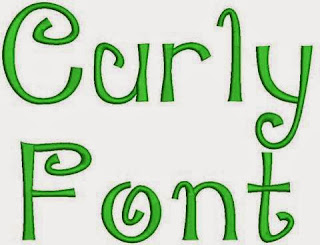 1) NO CURLY FONTS! Not for your title, your name, or any other place in the body of the letter. Use Times New Roman (TNR), Arial, or Courier even. I don't care as long as it's easy to read. Show you are original and unique in your writing, not your font. Curly font is sort of like putting a big ole circle or heart over your i's like some girls did in grade school. Editors don't like that. Two of the manuscripts today had curly fonts. ::sigh::

But most importantly, if you're going to be published, you might as
well start learning standard formatting for your future editor. Making his/her job easier right out of the starting gate is a point in your favor. We have enough headaches. We love authors who are easy to work with and are willing to do their part. Will there be some in-house formatting stuff? Of course. But there are a few simple things you can do to make your hopefully future editor Snoopy dance with joy and eat hand out the brownies for points.
First...
 |
| There's the hidden symbol button! Click it! |
To format properly, you need to become familiar with your word processing program. Most authors use Word and I can give you hints for that. If you use something else then you need to do a Web search for the different aspects of formatting. A big help for formatting is being able to see hidden symbols. You'll turn that on by selecting a big backward P on the HOME tool bar. You'll see lots of hidden things, like spaces and returns. It's going to be a useful tool.
If you don't know your program well then find the tutorial program and take a few minutes to learn it. Learn about the Tracking feature if you're not familiar with that, either. It will come in handy for edits.
On to some formatting tips.
 1) NO CURLY FONTS! Not for your title, your name, or any other place in the body of the letter. Use Times New Roman (TNR), Arial, or Courier even. I don't care as long as it's easy to read. Show you are original and unique in your writing, not your font. Curly font is sort of like putting a big ole circle or heart over your i's like some girls did in grade school. Editors don't like that. Two of the manuscripts today had curly fonts. ::sigh::
2) NO COLORS! Choose black like my evil heart.
3) NO TABLES! There is no need for a table to corral your name, address and contact info. It messes with final formatting.
6) DO NOT DOUBLE SPACE AFTER ENDING PUNCTUATION! A single space after ending punctuation is standard now in the industry. I learned to type with two spaces and I adapted. So can you. I have faith. If you really can't unlearn this habit then you need to learn how to remove them.
- On the right hand corner of the HOME page, select FIND. In the box, put in two spaces. You won't see them. Trust they're there.
- In the REPLACE box, put one space.
- Then click REPLACE ALL, and follow the prompts. All of the double spaces will be removed.
 |
| Here's the paragraph box! Note the little box under the word After. |
4) NO TABS! Learn how to indent the first paragraph. I'll give a quick tutorial.
- Under PAGE LAYOUT, select PARAGRAPH.
- Click SPECIAL for the drop down box.
- Select FIRST LINE.
- Then move over one box and BY: select .05 (which is default.)
5) NO SPACES BETWEEN PARAGRAPHS!
- Under PAGE LAYOUT, select PARAGRAPH
- Go half way down the box to under the word AFTER.
- Click the box that says: Don't add space between paragraphs of the same style.
6) DOUBLE SPACE YOUR MANUSCRIPT!
- Under PAGE LAYOUT, select PARAGRAPH
- Click LINE SPACING
- Select DOUBLE (1.5 space isn't bad, either. Don't send it single spaced.)
7) USE PAGE BREAKS! Your manuscript looks so much more professional if you use a page break after your title page and at the end of each chapter instead of a zillion hard returns.
- Click the INSERT tab on the tool bar
- Click PAGE BREAK
8) EDITORS LIKE CHAPTERS! I know the in thing is to name your chapter something cute, but please put CHAPTER ONE above it. Or whatever chapter it is. Since you used a page break, you'll want to go down at least six returns (hit enter six times.)
- DO NOT do weird formatting things with your chapters. It messes up formatting at the very end of the process. Just type CHAPTER, then type out the number. Very easy. Do not use bold, or curly letters, or colored fonts, or tables. Just type it.
9) DO NOT ADD EXTRA SPACES AROUND PUNCTUATION! I get lots of manuscripts where they add tons of spaces around punctuation. Ellipses and em dashes get the most abuse and I have examples below of what they should look like. Most formatting programs that turn your Word document into Kindle or Epub formats will do what they need to do to make it look good.
- An ellipse is three periods in a row. Like this...and if you use it in a sentence as I did, you do not put spaces around it... But if you use it to end a sentence, you do put spaces around it. You can program that to happen when you start typing more than one period, but I have no clue how I did that.
- An em dash is used instead of a semi colon for lots of things--and is made by putting two small dashes together. No spaces around them. You can program Word to change the two dashes into one long one. Again, I forget how. But if you do them the same way each time, it's easy at the end of the editing process to search and find two dashes--and replace them.
10) USE HARD RETURNS! A hard return is basically hitting the enter key. But some people will hit the shift key AND the enter key, which creates a soft return. This messes with formatting. Don't do that. You'll see them if you use the hidden symbols button.
To remove soft returns...
- In FIND use ^l (that's a lower case L)
- In REPLACE use ^p
That's it! I hope that was helpful and you all run right over to the computer and format your little hearts out. If you have any questions, ask away!

Wednesday, November 27, 2013
The Wizard At The Pass: Creating Profitable Boundaries For Your Business #authors
Today's post is geared to my fellow author! Mary Caelsto has been helping authors find their inner muse through her endeavor, The Muse Charmer. Hopefully you'll find some inspiration from this post on creating profitable boundaries for your business. Enjoy!
The image of Gandalf standing on the narrow strip of stone holding back the Balrog is an iconic scene from The Fellowship Of The Ring. Made all the more powerful by Ian McKellen’s portrayal of Gandalf, this scene is pivotal in the book. And as writers, this scene is powerful for our career.
We might not have the powers of sorcery that Gandalf the Grey has, but we do have the nine superpowers of the muse. Those are pretty powerful. Yet, in order to fully utilize our muse (and its associated superpowers) we need something more. We need boundaries.
Just as the Balrog tried to stop The Fellowship from continuing on its quest to find the ring, writers have many things which try and stop them from pursuing their writing career. Life happens, even to the best of us. Most writers I know have to juggle their writing along with a “day” job, caring for their families, and other commitments. It’s a busy schedule to be sure, one that makes most non-writers’ heads spin. If we don’t pay attention, those commitments will overrun our writing, leaving stories and lost chances by the side of the road.
I think most of us have been there with missed submission deadlines for publisher projects or even missed deadlines with our editors. The book we wanted to write becomes the book we’ve been working on for weeks, months, sometimes even years. The story is all too familiar, and those of us who have experienced it don’t want to go back there again.
The best way to stop “life” from happening to our writing is to set boundaries. Draw the proverbial line in the sand or across the stone bridge. We do this to carve out time for us to write. When we look at what submission calls we’ll submit to or what stories we will compose, we’re setting boundaries. Some authors won’t write about certain topics; those decisions become boundaries. The same process goes with publishers. Many of us have publishers we will, or we won’t work with. Each boundary we place guides us closer to our goal.
Some boundaries are easy. For example, if we have no interest in a specific topic, then we won’t write about it. When we hear about a publisher behaving badly, the decision comes quickly not to submit to that publisher. If a market is non-paying, we might make the easy decision that it isn’t for us.
Other boundaries we create aren’t as easy and might require thought and careful deliberation. How to accommodate writing and family would be one of those boundaries. Perhaps it means having a spouse or friend help with child care. Maybe it means shutting yourself in your office for a specified amount of time. It means standing up for your career and your dreams. Saying YES to the life you want to build for yourself.
In order to do this, it’s important for a writer to connect with his or her Guardian Muse. This is the inner wizard standing at the pass determining what can, or cannot, pass. Connecting with the Guardian Muse starts with a single step: saying YES to your writing career. Then, follow that up by treating it like a career.
Regular schedules help. Sometimes that isn’t possible, so writing when you can, and as often as you can, works, too. Getting rid of guilt that you’re taking care of yourself and your career will make finding that Guardian Muse all the easier. In fact, just that single step can pull your Guardian Muse out of hiding and send it into action.
Boundaries are important. Ask any sports teams and boundaries can be essential to how the game is played. We erect boundaries in our lives all the time, so why shouldn’t our writing be any different? Not from a sense of fear, for Gandalf showed no fear with the Balrog. He did what he needed to do so The Fellowship could continue. And that’s what our Guardian Muse will do for us. Stand at the boundary and ensure that only those things which are essential to our career pass through.
Our writing career might not be as life or death as the scene in Lord of the Rings. However, it is just as important to us, and it’s worthy of our protection.
If you’re interested in learning more about the Guardian Muse, visit Mary’s website, http://www.musecharmer.com, to pick up her free cd, Easy ways to Unleash Your Inner Muse-Powered Super Hero (of which your guardian muse is one of the powers).
Mary Caelsto's Bio:
With over a decade in publishing as an author (over 50 books/novellas published under a couple of different pen names) as well as approaching five years as a publisher, Mary Caelsto helps authors create careers as inspired as the stories they write. With her work as The Muse Charmer, she puts authors in touch with their muse. Visit her website at http://www.musecharmer.com to learn more about Mary and her work.
~Mia
~*~
The Wizard At The Pass: Creating Profitable Boundaries For Your Business
By
Mary Caelsto
We might not have the powers of sorcery that Gandalf the Grey has, but we do have the nine superpowers of the muse. Those are pretty powerful. Yet, in order to fully utilize our muse (and its associated superpowers) we need something more. We need boundaries.
Just as the Balrog tried to stop The Fellowship from continuing on its quest to find the ring, writers have many things which try and stop them from pursuing their writing career. Life happens, even to the best of us. Most writers I know have to juggle their writing along with a “day” job, caring for their families, and other commitments. It’s a busy schedule to be sure, one that makes most non-writers’ heads spin. If we don’t pay attention, those commitments will overrun our writing, leaving stories and lost chances by the side of the road.
I think most of us have been there with missed submission deadlines for publisher projects or even missed deadlines with our editors. The book we wanted to write becomes the book we’ve been working on for weeks, months, sometimes even years. The story is all too familiar, and those of us who have experienced it don’t want to go back there again.
The best way to stop “life” from happening to our writing is to set boundaries. Draw the proverbial line in the sand or across the stone bridge. We do this to carve out time for us to write. When we look at what submission calls we’ll submit to or what stories we will compose, we’re setting boundaries. Some authors won’t write about certain topics; those decisions become boundaries. The same process goes with publishers. Many of us have publishers we will, or we won’t work with. Each boundary we place guides us closer to our goal.
Some boundaries are easy. For example, if we have no interest in a specific topic, then we won’t write about it. When we hear about a publisher behaving badly, the decision comes quickly not to submit to that publisher. If a market is non-paying, we might make the easy decision that it isn’t for us.
Other boundaries we create aren’t as easy and might require thought and careful deliberation. How to accommodate writing and family would be one of those boundaries. Perhaps it means having a spouse or friend help with child care. Maybe it means shutting yourself in your office for a specified amount of time. It means standing up for your career and your dreams. Saying YES to the life you want to build for yourself.
In order to do this, it’s important for a writer to connect with his or her Guardian Muse. This is the inner wizard standing at the pass determining what can, or cannot, pass. Connecting with the Guardian Muse starts with a single step: saying YES to your writing career. Then, follow that up by treating it like a career.
Regular schedules help. Sometimes that isn’t possible, so writing when you can, and as often as you can, works, too. Getting rid of guilt that you’re taking care of yourself and your career will make finding that Guardian Muse all the easier. In fact, just that single step can pull your Guardian Muse out of hiding and send it into action.
Boundaries are important. Ask any sports teams and boundaries can be essential to how the game is played. We erect boundaries in our lives all the time, so why shouldn’t our writing be any different? Not from a sense of fear, for Gandalf showed no fear with the Balrog. He did what he needed to do so The Fellowship could continue. And that’s what our Guardian Muse will do for us. Stand at the boundary and ensure that only those things which are essential to our career pass through.
Our writing career might not be as life or death as the scene in Lord of the Rings. However, it is just as important to us, and it’s worthy of our protection.
If you’re interested in learning more about the Guardian Muse, visit Mary’s website, http://www.musecharmer.com, to pick up her free cd, Easy ways to Unleash Your Inner Muse-Powered Super Hero (of which your guardian muse is one of the powers).
Mary Caelsto's Bio:
With over a decade in publishing as an author (over 50 books/novellas published under a couple of different pen names) as well as approaching five years as a publisher, Mary Caelsto helps authors create careers as inspired as the stories they write. With her work as The Muse Charmer, she puts authors in touch with their muse. Visit her website at http://www.musecharmer.com to learn more about Mary and her work.
Wednesday, September 25, 2013
Motivate THIS! With #TWRP Editor Trish Owens #WW
My guest today is Trish Owens, editor for The Wild Rose Press. She's here to talk about GMC--goal, motivation and conflict. She's decided to break it down into three parts, and for some reason she's picked Motivation as part one! Go figure. Anyway, she'll answer questions at the end. Have some chocolate while you read. She's brought plenty for everyone!
~Mia
Thanks, Mia. I brought chocolate because the last time I showed up there was nothing here to munch on. Nada. Not a crumb of cheese or even a cracker. And it also sort of helps with our topic of the day: Motivation.
In life, we're motivated to perform actions. Some things are fairly simple, like consuming that bit of chocolate now melting in your greedy fingers. You didn't need much motivation to eat it. It's tasty, it's melting, AND it was free (it's really good chocolate, too!) So why not eat the chocolate? Bacon is another low-motivation food. Shoe shopping on someone else's dime...sure! Take this lotto ticket? Why, thanks!
But unfortunately...life is not that easy. Nor should your characters have it that easy when it comes to romance. It would make for a boring book to just have Ed and Mia meet and fall in love. They need some challenges to get in their way to prove their love and make them motivated to overcome their conflict to be together!
Some things are a little harder to motivate, like dragging my fat butt off the chaise lounge, away from the hunks feeding me said chocolate to go work out at the gym. Blech. But if I want a MILF body and to be healthy, I need to do this. That's my motivation to hit the gym. Of course, telling me Mr. Hottie who looks like Matthew Fox sans tattoos will be there increases the motivation. Win/win on that one.
Let's take our chocolate scenario one step further to show a different form of motivation. What if Mia over there ::pointing:: is allergic to chocolate? Yeah, that's a tragedy, and it makes it hard for us to motivate a reason for her to eat it if she's our heroine. Maybe her motivation to eating it is to spark an allergic reaction that will draw the evil dragon's attention away from the dashing hero, Gregor, who needs to escape NOW or he'll die. WAH! Of course she'll eat the deadly chocolate.
Mia's decision to eat the chocolate also sparks some conflict--what if the hero's clumsy fingers can't work the epi-pen or he has to scale the castle wall to call 911? That could spell trouble. But her motivation to eat the chocolate could be justified if it saves her darling Gregor from certain incineration.
Each scene you write should be motivated. If the Mia, our princess heroine, has said, "No, I am not dating Ed the horse poop cleaner. Period. I'm going to call Gregor, the dashing knight." Then there had better be some solid motivation behind Mia suddenly picking up the castle phone and calling Ed for a date instead of the dashing Gregor. Maybe Mia discovers Ed knows a secret about a dragon in a far away cave that Gregor wants to kill... A little smoochy smoochy and maybe Ed will spill all, so Gregor can be famous, win the king's vote of approval and Mia can get hitched. That's a great plan. That's motivation to pick up the phone.
You may find, though, that the reasons for motivation may change given the conflict at hand. Perhaps our heroine, Mia, is in the dragon's cave and suddenly realizes THE DRAGON is the hero! What if the dragon is none other than Ed, our lowly horse poop cleaner she's come to know and love, a shifter prince trying to save her from the real villain? Gregor isn't trying to save her. He's actually next in line to the throne, so he wants to kill her AND the dragon. Now, her motivation changes. She's not going to eat the chocolate. Maybe she'll pick up a sword and run Gregor through, race to the dragon, kiss him and he morphs into Ed, who underneath the straw and horse stench is the most handsome, kick-ass prince anyone has ever envisioned. Yeah. That's motivation.
Questions? Comments? I'll be around to answer them about motivation or about any publishing question you may have!
Thanks for having me!
Trish Owens, Editor.
The Wild Rose Press is featuring a fall blowout sale of all of their digital titles! 50% off, and if you order a mix of digital titles and print, your shipping is free if you order $50 or more.
The Wild Rose Press is an awesome place to be published! If you're an author, here's a link to their submissions page for erotic romance, erotica OR regular romance and mainstream.
~Mia
~*~
Thanks, Mia. I brought chocolate because the last time I showed up there was nothing here to munch on. Nada. Not a crumb of cheese or even a cracker. And it also sort of helps with our topic of the day: Motivation.
In life, we're motivated to perform actions. Some things are fairly simple, like consuming that bit of chocolate now melting in your greedy fingers. You didn't need much motivation to eat it. It's tasty, it's melting, AND it was free (it's really good chocolate, too!) So why not eat the chocolate? Bacon is another low-motivation food. Shoe shopping on someone else's dime...sure! Take this lotto ticket? Why, thanks!
But unfortunately...life is not that easy. Nor should your characters have it that easy when it comes to romance. It would make for a boring book to just have Ed and Mia meet and fall in love. They need some challenges to get in their way to prove their love and make them motivated to overcome their conflict to be together!
Some things are a little harder to motivate, like dragging my fat butt off the chaise lounge, away from the hunks feeding me said chocolate to go work out at the gym. Blech. But if I want a MILF body and to be healthy, I need to do this. That's my motivation to hit the gym. Of course, telling me Mr. Hottie who looks like Matthew Fox sans tattoos will be there increases the motivation. Win/win on that one.
Let's take our chocolate scenario one step further to show a different form of motivation. What if Mia over there ::pointing:: is allergic to chocolate? Yeah, that's a tragedy, and it makes it hard for us to motivate a reason for her to eat it if she's our heroine. Maybe her motivation to eating it is to spark an allergic reaction that will draw the evil dragon's attention away from the dashing hero, Gregor, who needs to escape NOW or he'll die. WAH! Of course she'll eat the deadly chocolate.
Mia's decision to eat the chocolate also sparks some conflict--what if the hero's clumsy fingers can't work the epi-pen or he has to scale the castle wall to call 911? That could spell trouble. But her motivation to eat the chocolate could be justified if it saves her darling Gregor from certain incineration.
Each scene you write should be motivated. If the Mia, our princess heroine, has said, "No, I am not dating Ed the horse poop cleaner. Period. I'm going to call Gregor, the dashing knight." Then there had better be some solid motivation behind Mia suddenly picking up the castle phone and calling Ed for a date instead of the dashing Gregor. Maybe Mia discovers Ed knows a secret about a dragon in a far away cave that Gregor wants to kill... A little smoochy smoochy and maybe Ed will spill all, so Gregor can be famous, win the king's vote of approval and Mia can get hitched. That's a great plan. That's motivation to pick up the phone.
You may find, though, that the reasons for motivation may change given the conflict at hand. Perhaps our heroine, Mia, is in the dragon's cave and suddenly realizes THE DRAGON is the hero! What if the dragon is none other than Ed, our lowly horse poop cleaner she's come to know and love, a shifter prince trying to save her from the real villain? Gregor isn't trying to save her. He's actually next in line to the throne, so he wants to kill her AND the dragon. Now, her motivation changes. She's not going to eat the chocolate. Maybe she'll pick up a sword and run Gregor through, race to the dragon, kiss him and he morphs into Ed, who underneath the straw and horse stench is the most handsome, kick-ass prince anyone has ever envisioned. Yeah. That's motivation.
Questions? Comments? I'll be around to answer them about motivation or about any publishing question you may have!
Thanks for having me!
Trish Owens, Editor.
~*~
I hope you all enjoyed that look into motivation! Next time we'll cover either goal or conflict, depending on what Trish decides! Thank you to Trish Owens for taking time out of her busy schedule to blog for us. Just a heads up, if you're looking for a freelance editor, she does edit for a limited amount of Indie authors. My email is on the sidebar, I'll put you in touch with her.The Wild Rose Press is featuring a fall blowout sale of all of their digital titles! 50% off, and if you order a mix of digital titles and print, your shipping is free if you order $50 or more.
The Wild Rose Press is an awesome place to be published! If you're an author, here's a link to their submissions page for erotic romance, erotica OR regular romance and mainstream.
Wednesday, September 18, 2013
How To Be A Good Blog Guest!
I have been hosting a lot of authors lately to help keep the masses entertained, but it occurred to me there are authors out there who may not realize what is needed for a good blog post. And granted, I'm not perfect. I'm sure someone has pulled their hairs out and wished for a box of color for the grays I gave them.
So today, I'm going to clue you in on how to be an awesome guests who makes sure I have everything I need at my fingertips and not one who turns a blog post into a scavenger hunt. To avoid this scenario (because it's really not fun to do a scavenger hunt with no competition and no prize) consider the below.
What's in a good blog post?
 I've polled a bunch of Facebook friends and the consensus is out! A good blog post is like a great cup of coffee. They want it to savor it right down to the last drop.
They like posts that contain...
Ask the blog host/hostess what they need from you. Most will want at the least:

So today, I'm going to clue you in on how to be an awesome guests who makes sure I have everything I need at my fingertips and not one who turns a blog post into a scavenger hunt. To avoid this scenario (because it's really not fun to do a scavenger hunt with no competition and no prize) consider the below.
What's in a good blog post?
I've polled a bunch of Facebook friends and the consensus is out! A good blog post is like a great cup of coffee. They want it to savor it right down to the last drop. They like posts that contain...
- Intimate posts about inside things in your life, your writing process, something human
- A post that connects something to your book. For example, Barbara Bettis had a great post about mercenaries for her historical romance. Not too long, lots of great information, and I really wanted to read her book after!
- Excerpts!
- Character interviews
- Anything that's not just a promo post
- They also like gifts and things to win, too. :)
Edited to add... Don't be afraid to use your name and your book's name in your post as much as possible. Not every sentence, but make sure it's sprinkled nicely. This neat trick is called Search Engine Optimization (SEO). The little robots that search the Internet pick up on these usages. When someone searches your name or your titles, they are more apt to be selected in the overall search! This is the one time you want to be a victim to the robots! I try to add it in for my guests, but it's something to consider going foward.
Ask the blog host/hostess what they need from you. Most will want at the least:
- Book blurb (back cover copy)
- Cover(s) of the book(s) you're promoting.
- Short excerpt. If you write erotic romance or erotica, ask the host/hostess what heat level the prefer
- Bio and picture (if you wish)
- Links: Tell readers where to find you! I did a page of links for all of the main retailers for the book AND for my page, plus my Facebook, Goodreads, Pinterest and Twitter accounts. I keep this on file and then just copy and paste into a document. You can hyperlink or do it the old-fashioned way.
- Some may want a special kind of post like a character interview. You'll need to work out what is wanted or needed.
Please Do NOT...
- Tell the hostess/host they can get your bio off your website.
- Tell the hostess/host they can get your blurb off Amazon.
- Make the hostess/host hunt down your links.
- Make the hostess/host stalk your Facebook page for a cover or banner or anything else.
- Send the hostess/host 67 things and tell them to create something fun! If they want to create something fun, they can go write.
- Ask the hostess/host for character interview questions. They probably don't know your characters.
- Send your hostess/host PDF's to copy and paste. Those suckers are IMPOSSIBLE to copy! The hostess/host of the blog is not going to steal your work. Really. Just send a .doc or .rtf.
- Expect the host/hostess to get links off your sig line in an email. Just have it all ready for him/her.

Please Do...
- Proof read and edit your blurb and excerpt! Personal note...I am an editor in my real life. I realize people make mistakes (I do, all the time) but sending me a post full of errors makes me really twitchy.
- Send something interesting! On my side, it's hard to help my guests connect unrelated, random things when the host/hostess don't know your book or you.
- Send a big .jpeg of your cover. It comes out clearer and the host/hostess can always downsize it if it's too large for the post.
- Send links! Amazon author page, FB author page, Twitter, Pinterest... Check them to make sure they're correct.
- Send your post as early as possible so your host/hostess can start building your post. If you're waiting for links those are easy to insert.
I hope this is helpful! I've had some awesome guests so far, and the rest of September and October are chock-full of fun things. Stay tuned!
Thursday, November 29, 2012
Keeping the Prose Active
You'd think something as active as sex would call for a host of really good words, but yet erotic romance writers seem to get stuck in the same host of inactive words that don't lend anything to their writing. I fall victim to this as well.
Every book it seems my editor finds some new weak or repetitive word that drives her insane and leads to a herd of red scratches and little comment boxes. The last email I sent of a scene for her to look at was returned, pointing out I had used the word brush four times (ack!) Another time it was the word suck (in my defense, it was blowjob, and the word was part of the discussion.) It's also really hard to come up with alternate body part words, seeing there are two main active parts in all of this excitement, unless it's a menage, then there could be a host of fun parts, but still lacking on the variety.
So what words should you look for in your manuscript to keep the evil red scratches and comment boxes at bay? Here's a list I use. Ready? Go.
The first big search/delete: THAT--95% are removable without changing sentence structure/meaning
Basic Verbs:
Push, look, gaze, press, pull, move, bring, brought, was (you can't avoid all of them, but you can most)
Move and look of the above are pet peeves of my editor's.
Eh: He moved toward her.
Better: Stalked? Ambled? Tip-toed? Stampeded? Flew like a flying squirrel?
Eh: He looked at the volcano.
Better: He snapped his attention toward the flaming, spewing volcano.
Repetitive body parts:
Body, body parts, any buzz word that is a body part
Overusing the body parts is a hard one, because there are only so many parts doing the action. Hands, fingers, mouth, lips...there are only so many ways to vary using them, but vary you must. Seeing the same words over and over feels repetitive to the reader and gives the sex scene a Slot A/Tab B feel. The key is to get creative with how you word the various actions. Some examples...
Body is a pet peeve thanks to an editor friend.
Eh: He moved his body toward her hand. (I was sneaky and got two in.)
Yeah!: He arched his hips, shoving his aching, hard shaft into her willing hand. (Oooh, baby.)
Buzz words: Yep, the names for the naughty but fun parts. Penis and vagina sound clinical. It's hard to vary, but try not to use cock twenty times on a page, six times in a sentence. Womb is not a good choice, since it makes people think of babies, and when you're smexing (unless you're smexing to make babies) it's not a good thing.
Passive/telling words to avoid:
Thought, knew, felt, that, because, now, saw, watched, noticed, heard, thought, knew, decided, realized
These are all words that tell instead of show. Telling is a horrible trap to get into. Yes, I'm telling a story, but showing how the character feels is much more inviting to the reader. Here are some examples.
Eh: I felt scared.
Better: Terror raced up my spine.
Eh: I saw the alien ship land.
Better: Holy shit, an alien ship landed and they are making crop circles in my field! (They better not, I'd be angry.)
If you're like me, now you're whining and tired. That's a lot of searching! But your story will be better for it, and your readers will thank you.
Every book it seems my editor finds some new weak or repetitive word that drives her insane and leads to a herd of red scratches and little comment boxes. The last email I sent of a scene for her to look at was returned, pointing out I had used the word brush four times (ack!) Another time it was the word suck (in my defense, it was blowjob, and the word was part of the discussion.) It's also really hard to come up with alternate body part words, seeing there are two main active parts in all of this excitement, unless it's a menage, then there could be a host of fun parts, but still lacking on the variety.
So what words should you look for in your manuscript to keep the evil red scratches and comment boxes at bay? Here's a list I use. Ready? Go.
The first big search/delete: THAT--95% are removable without changing sentence structure/meaning
Basic Verbs:
Push, look, gaze, press, pull, move, bring, brought, was (you can't avoid all of them, but you can most)
Move and look of the above are pet peeves of my editor's.
Eh: He moved toward her.
Better: Stalked? Ambled? Tip-toed? Stampeded? Flew like a flying squirrel?
Eh: He looked at the volcano.
Better: He snapped his attention toward the flaming, spewing volcano.
Repetitive body parts:
Body, body parts, any buzz word that is a body part
Overusing the body parts is a hard one, because there are only so many parts doing the action. Hands, fingers, mouth, lips...there are only so many ways to vary using them, but vary you must. Seeing the same words over and over feels repetitive to the reader and gives the sex scene a Slot A/Tab B feel. The key is to get creative with how you word the various actions. Some examples...
Body is a pet peeve thanks to an editor friend.
Eh: He moved his body toward her hand. (I was sneaky and got two in.)
Yeah!: He arched his hips, shoving his aching, hard shaft into her willing hand. (Oooh, baby.)
Buzz words: Yep, the names for the naughty but fun parts. Penis and vagina sound clinical. It's hard to vary, but try not to use cock twenty times on a page, six times in a sentence. Womb is not a good choice, since it makes people think of babies, and when you're smexing (unless you're smexing to make babies) it's not a good thing.
Passive/telling words to avoid:
Thought, knew, felt, that, because, now, saw, watched, noticed, heard, thought, knew, decided, realized
These are all words that tell instead of show. Telling is a horrible trap to get into. Yes, I'm telling a story, but showing how the character feels is much more inviting to the reader. Here are some examples.
Eh: I felt scared.
Better: Terror raced up my spine.
Eh: I saw the alien ship land.
Better: Holy shit, an alien ship landed and they are making crop circles in my field! (They better not, I'd be angry.)
If you're like me, now you're whining and tired. That's a lot of searching! But your story will be better for it, and your readers will thank you.
A Moment to say THANK YOU!
It's hard to believe Just Ask was released two weeks ago to Amazon, and I'm so grateful to everyone who has supported me in every way. It's been hanging around the top 20 GBLT lists for over a week, and has been in the top 100 since the debut weekend. That means a lot of thanks are needed to be offered up because I'm grateful for every second of this fabulous ride.
So...Thanks to the GBLT community, for being special, open, wonderful people. Thank you to the many m/m authors who have given me great stories to read and dream about, sparking my own ideas.
Thanks to the ARC readers and reviewers! Thank you friends and fans (my family is blissfully unaware of my smut writing capabilities. Except my sister.) Thanks to the inner ring of friends who have to hook up the IV tequila/coffee lines and who listen to me complain about running out of coffee and tequila on a regular basis (I'm not that difficult, really.)
Lastly, thank you Diana Carlile, my editor and cover artist. She dared me to write it, so I did. Sometimes dares are a good thing.
Friday, September 14, 2012
How to Write Kick-Ass Blurbs!
Editor for The Wild Rose Press, Trish Owens, has stopped by with a few informational posts about writing kick-ass blurbs. She and Diana Carlile fix my blurbs for me, and I love how they wrangle my words into something really cool someone just might want to buy. I asked her to give us insight about her gift of blurb writing.
 Secret Agent Jake Anderson would rather have the measles than love his best friend’s wife. So when she gives him a mission— to find his own woman to love— he knows just the woman to target. Exotic beauty Tia Richards— his new partner— is wild, twisted, and has no limits when it comes to adventure, in bed and out. She’s perfect for him. Now he just has to get Tia and his heart to agree.
Mia: Hi, Welcome, Trish! I have coffee and tequila, as well as a buffet of delectable snacks. Help yourself.
Trish (peering over at the coffee table) Does the hunk mind that he has vegetarian sushi decorating his abs? He looks suspiciously like the guy from your Ripped cover.
Mia: Shhh. I kidnapped him. He doesn't mind as long as you don't put soy sauce on him. It tickles.
Trish (helping herself to a cucumber roll): So blurbs. You stink at them, Mia. Really. You write such wonderful prose and then you hand us drivel. What do you have to say about that?
Mia: You and Diana never taught me your secrets. I think you don't share on purpose, so we can bow down to you both. I think you get a kick off the goddess worship.
Trish: Maybe a little. I don't get worshiped as much as Diana. I kinda like it.
Mia: So spill. Not the soy sauce!
Trish: Sorry, sweet boy. (Pats the hunk's chest. He grunts.) So great blurbs come from knowing your characters and their conflict. A great blurb is short, to the point, and contains the secret formula of outlining your characters' goals, motivations and conflicts. It also contains the flavor and genre of your book, be it erotic romance, historical, or comedy. Try to keep it around 150 words. 200 words, maximum.
Mia: That's it?
Trish: That's it. Well, in a nutshell. For longer novels, I like to make two paragraphs, one about the hero, one about the heroine. For shorter novels you can stick to one informative paragraph. I like to state very clearly what that character wants, why they can't have it, and what they are going to do about getting it.
Mia: So...Mia wants sushi, but she can't have it because Trish is eating it all. Mia will get the sushi, dammit, by beaning Trish on the head. How's that?
Trish: Sure. That works if you want crappy blurbs from now on. You want me to craft something from that? You sure about that? Think of your career future.
Mia: I see it as a challenge, but I don't want crappy blurbs. How about I create you a sushi banquet served on Ripped boy so you think about sharing?
Trish: That's better.
Mia: Then prove your greatness, O Blurb Queen.
Trish: Blurb Princess. :::cracking knuckles::: Here it goes.
Lowly serf Mia has always wanted to taste the delicacies wealth and power have to offer, starting with the sushi held in the hand of the powerful yet deadly monarch, Princess Trish of the Garden. But the strict rules of The Garden do not allow those of tainted blood to be more than chattel. Mia yearns to be more, to sample more, and yet can't seem to attract the gorgeous yet aloof redhead who holds the reins to Mia's body, the key to her heart. Catching her eye could mean sudden death. It could also mean ultimate ecstasy. Mia tempts fate by creating the princess's favorite sushi dish, served off the most gorgeous male slave The Garden has to offer, and now the princess is heading her way. Will Mia's first taste of the forbidden be one laced with ultimate desire, or will it end with the kiss of death?
Mia: That was...amazing, and 150 words, exactly. I take it it's Sci-fi or fantasy with a little suspense. I see that you're a scary...er...princess, and I'm your slave. I think I'm fairly stupid to tempt fate, though.
Trish: I sense you were going to say I was a scary bitch. Go ahead, you can say it. I'm a ninja princess in my own mind.
Mia: No, really. You're nice in person. One complaint, it really smacked of a little f/f action. No offense, but I like him a lot more. ::pointing at the hunk laying on the coffee table, decorated in sushi:::
Trish: I got a little carried away. If we woke studly up, it could be f/f/m. ::laughing:: Kidding! You forget where I work. My mind just goes straight to the naughty side, all the time.
Mia: So...readers are going to want to know. Do I die, or do I get to eat sushi.
Trish: Your readers will have to wait to find out. If Spy Games: Lethal Limits doesn't release, you're dead.
Mia: We have readers waiting for Jake! You can't do that to them.
Trish: How about I take all the sushi and go home? Studly, too.
Mia: ::sighing:: Okay. Fine. Go. He needs a coat, though. He'll catch cold.
Trish (rising, and yanking the hunk by the hand): Why don't you share Jake's blurb, so they can see something decent I helped craft?
Mia. Good idea! I'll share the cover, too, since it's new! My thanks to Trish Owens for stopping by with that informational (and really scary) demonstration of blurb prowess.
Blurb for Spy Games: Lethal Limits, book 2 in the Spy Games series out late fall, 2012.
Secret Agent Jake Anderson would rather have the measles than love his best friend’s wife. So when she gives him a mission— to find his own woman to love— he knows just the woman to target. Exotic beauty Tia Richards— his new partner— is wild, twisted, and has no limits when it comes to adventure, in bed and out. She’s perfect for him. Now he just has to get Tia and his heart to agree.
Sexy spy Tia Richards has a problem, and the solution is Jake. The last time they hooked up, he left her bound and begging, unfulfilled, so close to finally getting the fireworks she deserves. But Jake loves his former partner, and Tia refuses to be second best. Will she listen to the ache in her heart that whispers she has what it takes to be first in Jake’s life, or will lethal limits separate them forever?
Subscribe to:
Posts (Atom)